




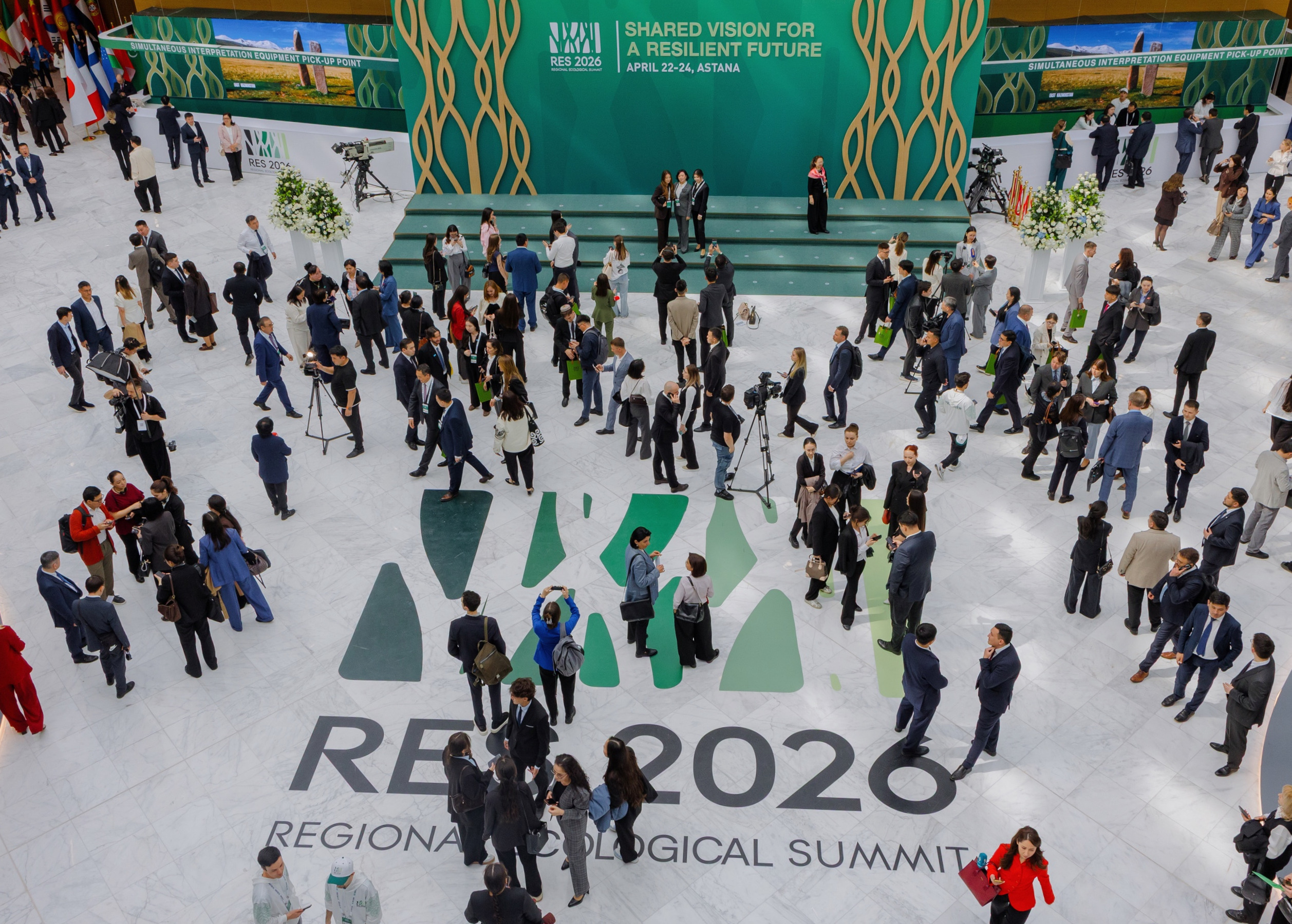
April 22-24, 2026, Astana hosted the 8th Central Asian Conference on Climate Change (CACCC 2026) on the sidelines of the Regional Ecological Summit (RES). This marked the first big regional climate forum following the 30th Conference of the Parties to the UNFCCC (COP30) in Belém. The COP30 agenda centered on climate finance, including the development of the Baku to Belém Roadmap aimed at mobilizing approximately 1.3 trillion USD annually by 2035 to support climate action. CACCC 2026 sought to ‘ground’ these and other global agreements within the regional context of Central Asia.
GIZ Central Asia participated in a series of high-level events and thematic discussions. Experts and partners from the regional programme “Climate Risk Management in Central Asia” (CRM CA) took part in a session dedicated to private sector climate finance, led a discussion on integrating climate risks into planning, and supported the participation of heads of meteorological services and the Center for Emergency Situations and Disaster Risk Reduction (CESDRR) in a dialogue on early warning systems, co-organized by WMO, Ministry of Ecology and Natural Resources of Kazakhstan, and Kazhydromet.
Climate Finance
On April 23, during the session “Climate Finance and the Private Sector” participants discussed mechanisms for mobilizing capital for environmental projects. Elena Zanardi, Component Lead at CRM CA, presented the results of the Small Grants and Climate Innovation Fund (SGCIF), which supported five regional initiatives aimed at enhancing climate resilience and reducing CO2 emissions.
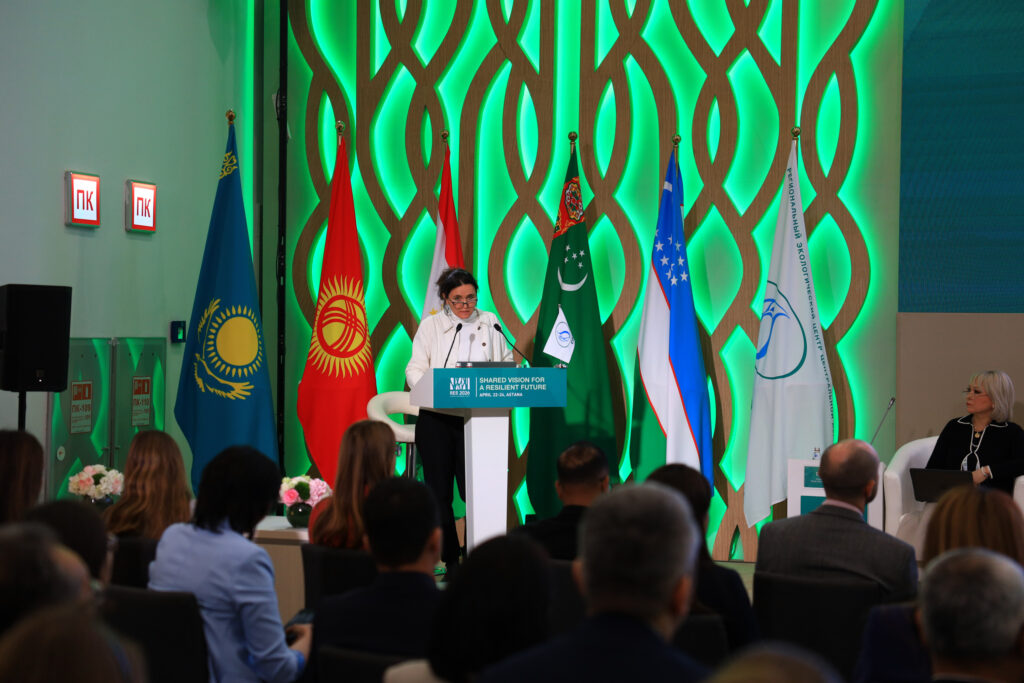
A key example was a project by the Global Green Growth Institute (GGGI), implemented jointly with the Ministries of Economy of Kyrgyzstan and Uzbekistan. Partners conducted a climate finance gap assessment with the development of policy recommendations. The analysis revealed an investment deficit: to meet climate goals, Kyrgyzstan needs $23 billion by 2035, while Uzbekistan requires up to $34 billion annually. To overcome barriers, it is recommended to implement national green taxonomies, mandatory ESG data disclosure, monitoring systems (MRV), and to create national green investment funds to form a pool of bankable projects. The study also noted the importance of Islamic finances, debt-for-climate swaps, and the issuance of green bonds, which are already being successfully implemented by banks in the region.
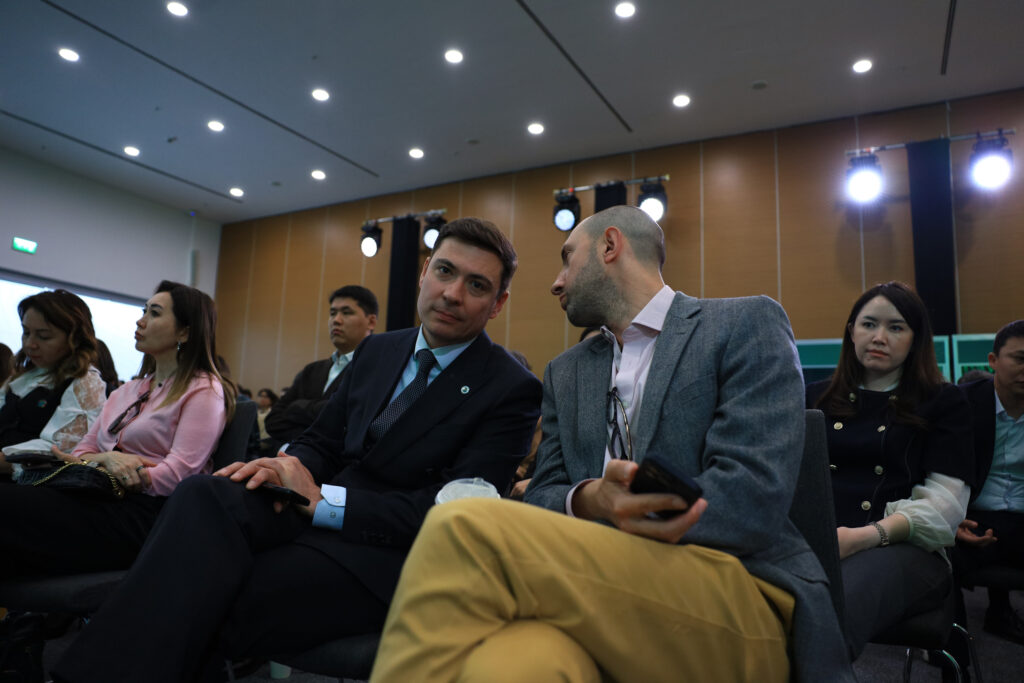
Notably, the ECOJER Association, another awardee of SGCIF, participated in the session, too. They shared progress on a regenerative agriculture project covering 20,000 hectares in Kazakhstan to develop the country’s first voluntary carbon credits mechanism. A methodology for the Verified Carbon Standard (VCS) VM0042 has already been listed and awaits its validation in line with state-of-the-art international standards. The collaboration with the Sharikon Baroj Rushd Association from Tajikistan is expected to scale up the experience beyond Kazakhstan.
Integrating Climate Risk Management into Planning
The session “Integrating Climate Risk Management into Strategic Planning in Central Asia” also took place on April 23. The session was co-organized by the Regional Environmental Centre for Central Asia (CAREC) and GIZ within CRM CA. Participants noted that following the update of national climate plans and the conclusion of COP30 in Brazil, it is critically important for the countries of the region to implement insurance mechanisms and early warning systems to protect their economies.
During the panel discussion, experts from Central Asian countries presented the current status of adaptation planning and climate risk integration. All countries are advancing processes to develop and update National Adaptation Plans (NAPs) and to integrate the climate agenda into national development strategies. However, the levels of institutionalization and practical application vary: while some countries are already working to include climate risks in strategic and subnational planning, the key task for others remains the formation of tools and approaches. A common challenge for all countries is the transition from analytics to practical solutions, specifically, incorporating climate risks into budgeting, investment priorities, and sectoral programs.
Dr. Temur Yunusov, Postdoctoral Associate at the University of Cambridge, emphasized that due to the drying of the Aral Sea, temperatures in the region are rising faster than the global average, shortening pollination periods and threatening the lives of people and livestock. Extreme heat and anomalous floods in recent years, which led to mass evacuations, necessitated stricter construction standards. The critical decline in water availability and the melting of glaciers pose a direct threat to food security and industrial operations. To adapt, it is necessary to transition to aeroponics and hydroponics and to completely phase out water-intensive crops such as cotton. In the energy sector, the replacement of hydropower with solar and wind stations is proposed, alongside the development of decentralized grids to increase infrastructure resilience. A key condition for the region’s survival remains the transboundary exchange of technologies and resources.
Anita Richter, Project Manager for “Policy Dialogue and Knowledge Management on Climate Protection Strategies” (DIAPOL-CE), GIZ, highlighted the “Green Central Asia” initiative, which promotes political dialogue and joint investments from Germany, the UK, and the EU. A vital practical tool mentioned was Macroeconomic Modeling (the CRED programme), which helps governments justify adaptation expenditures by demonstrating economic benefits such as GDP growth and job creation. Additionally, she told about measures taken within CRM CA to facilitate the integration of climate risks into planning: climate risk assessments, the implementation of local adaptation measures, and support for dialogue on climate risk management and disaster risk reduction.
Special Representative of the United Nations Secretary-General for Disaster Risk Reduction, and Head of the United Nations Office for Disaster Risk Reduction (UNDRR) Kamal Kishore called for an integrated approach. He outlined three regional priorities: regular updating risk assessments (e.g. every five years), diversifying risks within the agricultural sector, and strengthening the routine maintenance and operation of infrastructure.
Overall, following the session, it was noted that despite growing awareness of climate risks, countries often lack a clearly defined and prioritized portfolio of adaptation projects that are technically prepared and meet investment requirements. Existing initiatives remain predominantly pilot projects, and there is a lack of a consistent framework for scaling them across the entire region.
Early Warning Systems
On the morning of April 23, the strategic panel session “Early Warning Systems in Central Asia: From Regional Cooperation to a Sustainable Future” was held at RES. The organizers were Kazhydromet together with the World Meteorological Organization (WMO) and the national hydrometeorological services of the countries in the region.
Nurlan Kurmalayev, Vice-Minister of Ecology and Natural Resources of the Republic of Kazakhstan, opening the session, emphasized that the creation of effective early warning systems is a matter of strategic importance for ensuring the safety of the population in a volatile climate.
The discussions highlighted the implementation of the UN global initiative “Early Warnings for All” (EW4All). Under the moderation of WMO Technical Coordinator Jochen Luther, participants – including Heads of Hydromets, the Chair of the Intergovernmental Panel on Climate Change (IPCC), Sir Jim Skea, and representatives of the International Telecommunication Union (ITU) – examined in detail the four key elements of the system: risk assessment, monitoring, timely dissemination of warnings, and response preparedness. Particular attention was paid by the participants to the role of national hydrometeorological services as the foundation of the entire security system.
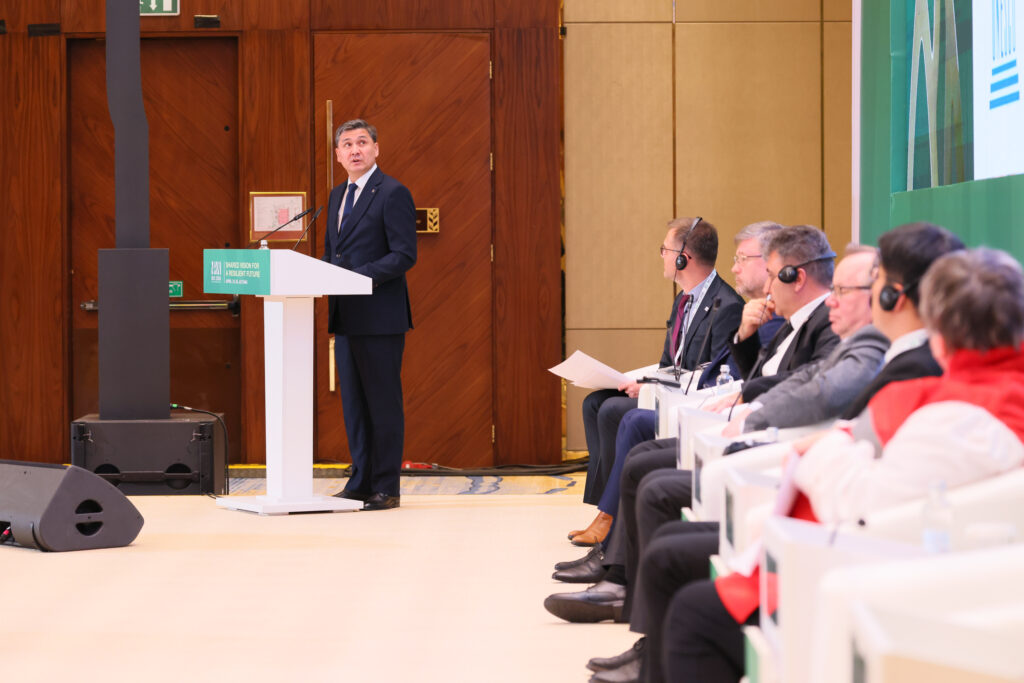
Aibol Akparov, Head of the Emergency Management Department at CESDRR, noted the importance of regional data exchange for reducing risks at the local level, while international experts confirmed that Central Asia’s experience makes a significant contribution to the global EW4All initiative. Partners from Turkey, Finland, China, and Russia also took part in the discussion, offering their technological solutions to strengthen meteorological security.
During the meeting, the heads of the national hydrometeorological services of Kazakhstan, Kyrgyzstan, and Tajikistan signed a joint statement on cooperation within the framework of the EW4All initiative. The document is aimed at strengthening regional interaction in the context of climate change and provides for the joining of efforts to monitor and forecast such threats as droughts and floods. The agreement records commitment to the standards of WMO and includes plans for the modernization of observation networks, the exchange of transboundary storm warnings, as well as the implementation of innovations and artificial intelligence to increase the accuracy of forecasts and protect the population and the economy of the region.
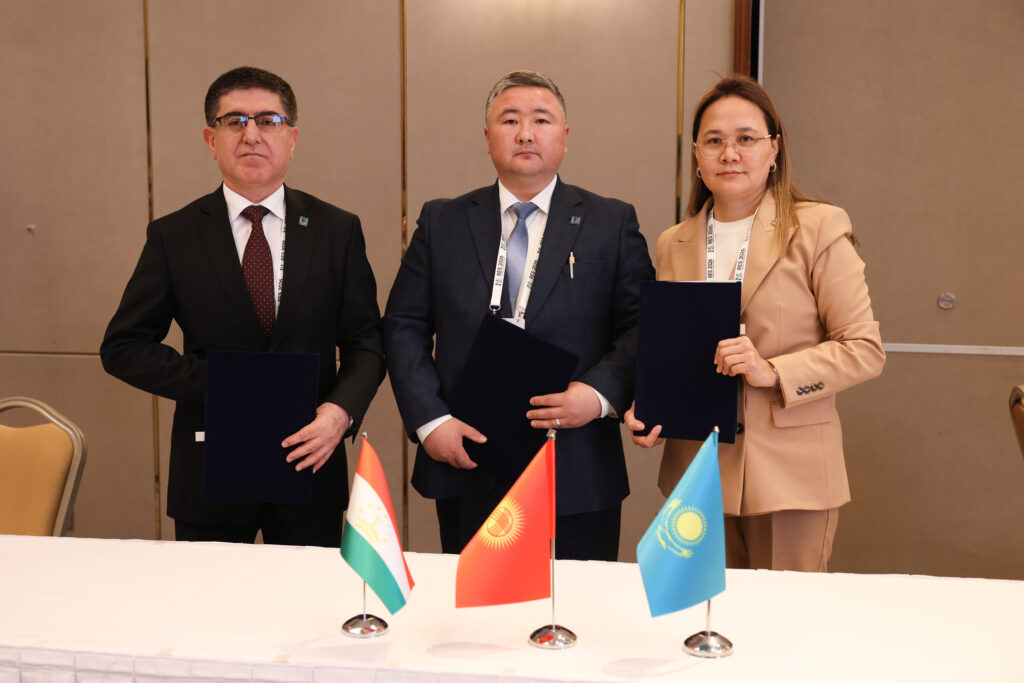
Photo: © Max Baikenov for RES 2026


