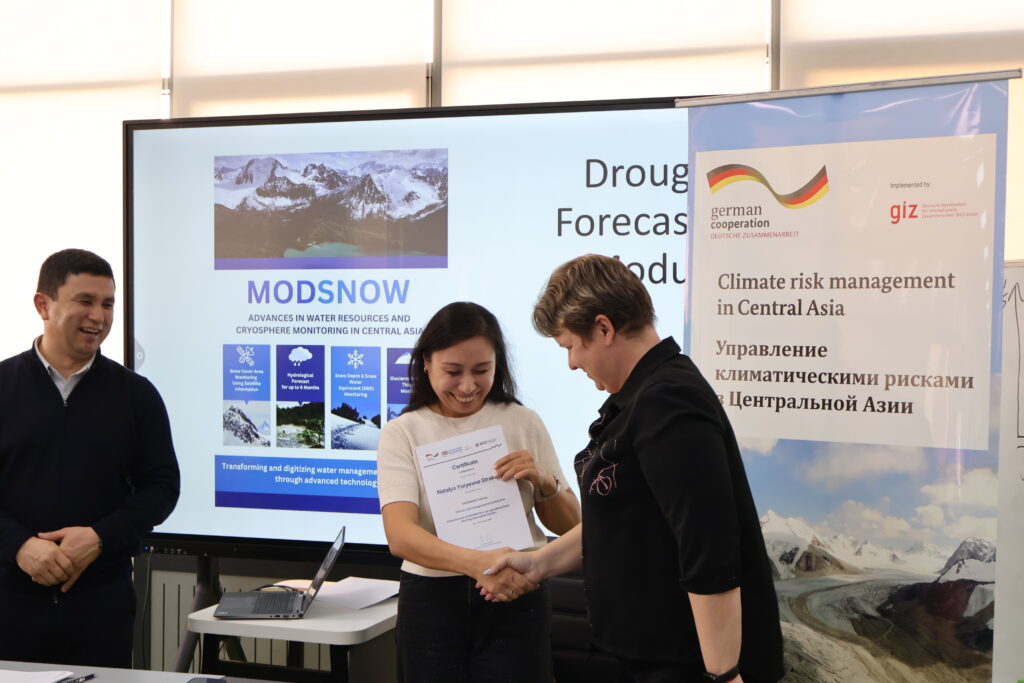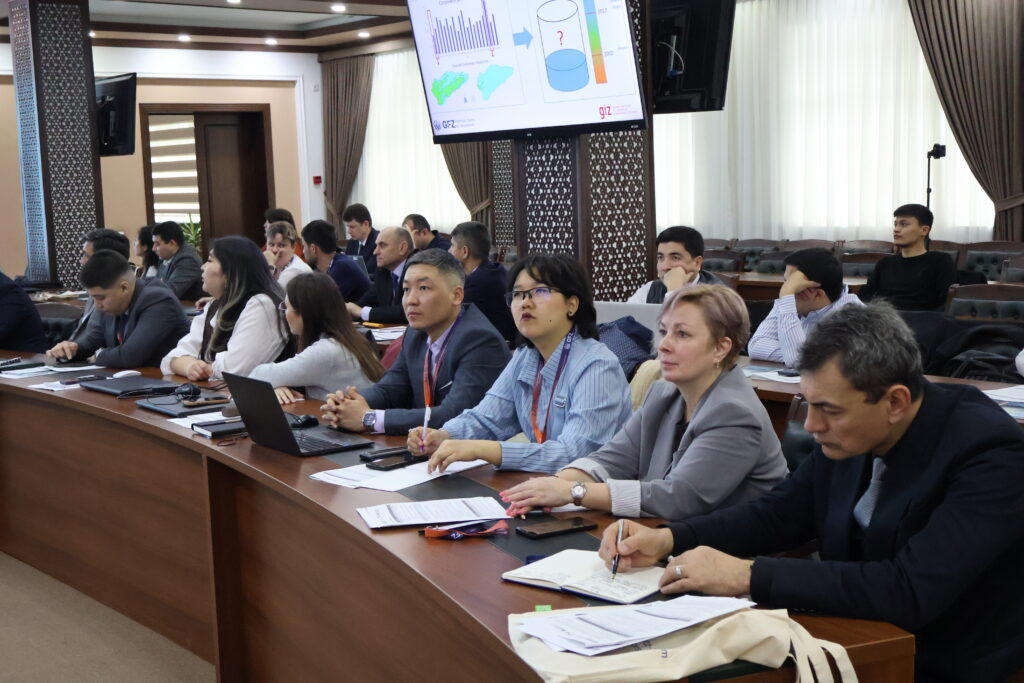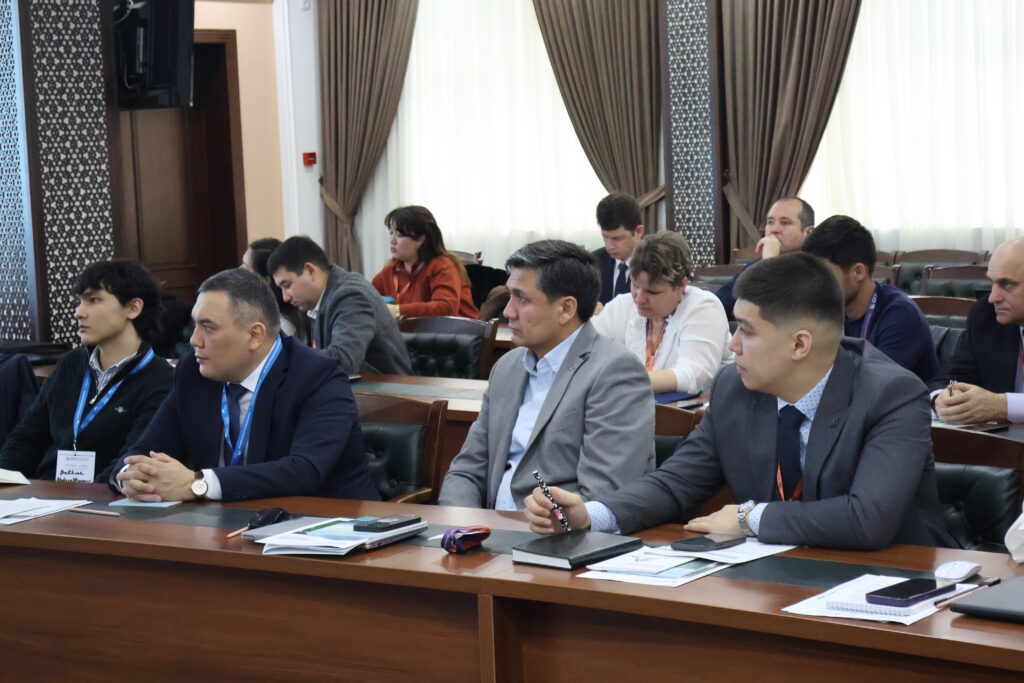



From 16 to 19 February 2026, Tashkent hosted a regional seminar to advance the MODSNOW programme toward becoming an operational early warning system. The event brought together representatives of the national hydrometeorological services and Ministries of Emergency Situations of Central Asian countries. Participants tested their preparedness for joint responses to flood risks along shared river basins under realistic scenario conditions.
For many years, the MODSNOW cryosphere and water resources monitoring tool has been used across the region. The GFZ Helmholtz-Centre for Geosciences continues to further develop the model, including its transformation into a regional early warning system. This work is supported by the programme “Climate Risk Management in Central Asia” (CRM CA), implemented by Deutsche Gesellschaft für Internationale Zusammenarbeit (GIZ) GmbH on behalf of the Government of Germany.
“MODSNOW is a program that was developed specifically for the Central Asian region, taking into account the conditions that exist here, such as the lack or absence of detailed data, and so on. Our regional approach is driven by the fact that almost all rivers in Central Asia are transboundary,” shared Dr. Abror Gafurov, Central Asia Working Group Lead at GFZ Helmholtz-Centre for Geosciences
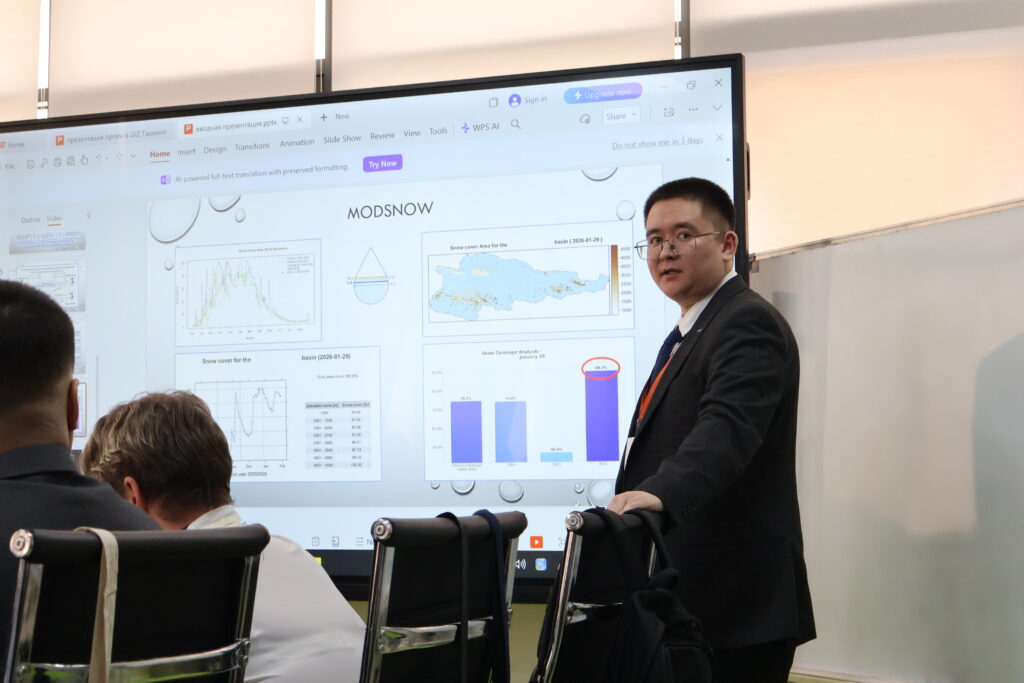
At the same time, due to climate change, hydrological disasters have become more frequent in the region. Under such conditions, not only accurate forecasting but also timely information exchange is of critical importance. Participants reviewed the updated capabilities of the MODSNOW system, including the use of snow cover data and hydrometeorological observations for flood risk assessment. Approaches to scaling the tool to the regional level were also discussed.
“If previous forecasts were mainly long-term, the MODSNOW model now enables predictions up to 10 days ahead. This allows us, as forecasters, to provide data to emergency authorities so they can respond promptly and minimise risks,” said Mariyam Nurkhan, Lead Researcher at the Hydrological Process Modelling and Calculations Department of the Research and Development Centre of Kazhydromet.
A key element of the seminar was a simulation exercise. Participants practised modelling using the MODSNOW interface developed by GFZ and tested the new flood forecasting module using the example of the Amu Darya basin. A drought forecasting module was also presented, demonstrated using the Khorezm–Dashoguz area.
Notably, representatives of the Ministries of Emergency Situations took part in such an event for the first time. Specialists from the hydrometeorological services and emergency authorities discussed interagency coordination mechanisms and reviewed a standardised emergency information exchange template. The template was developed by the Centre for Emergency Situations and Disaster Risk Reduction (CESDRR) as part of efforts to establish a regional early warning system, also supported by CRM CA. It aims to standardise the exchange of storm and hazard information between agencies.
“For emergency authorities, simulation exercises like this provide an opportunity to test system readiness under conditions that closely resemble reality. When an emergency situation is simulated on a transboundary river, we can see how quickly warnings are received from the hydrometeorological services and how effectively countries coordinate their actions,” noted Dastan Serkeshov, Lead Specialist of the Technogenic Emergency Management Department of the Emergency Prevention Committee under the Ministry of Emergency Situations of the Republic of Kazakhstan.
The exercise was conducted under the coordination of CESDRR within the framework of the Agreement between the Central Asian countries on the establishment of a Regional Early Warning System for Hydrological Disasters, presented on 17 October 2025.
Photo: © CESDRR