




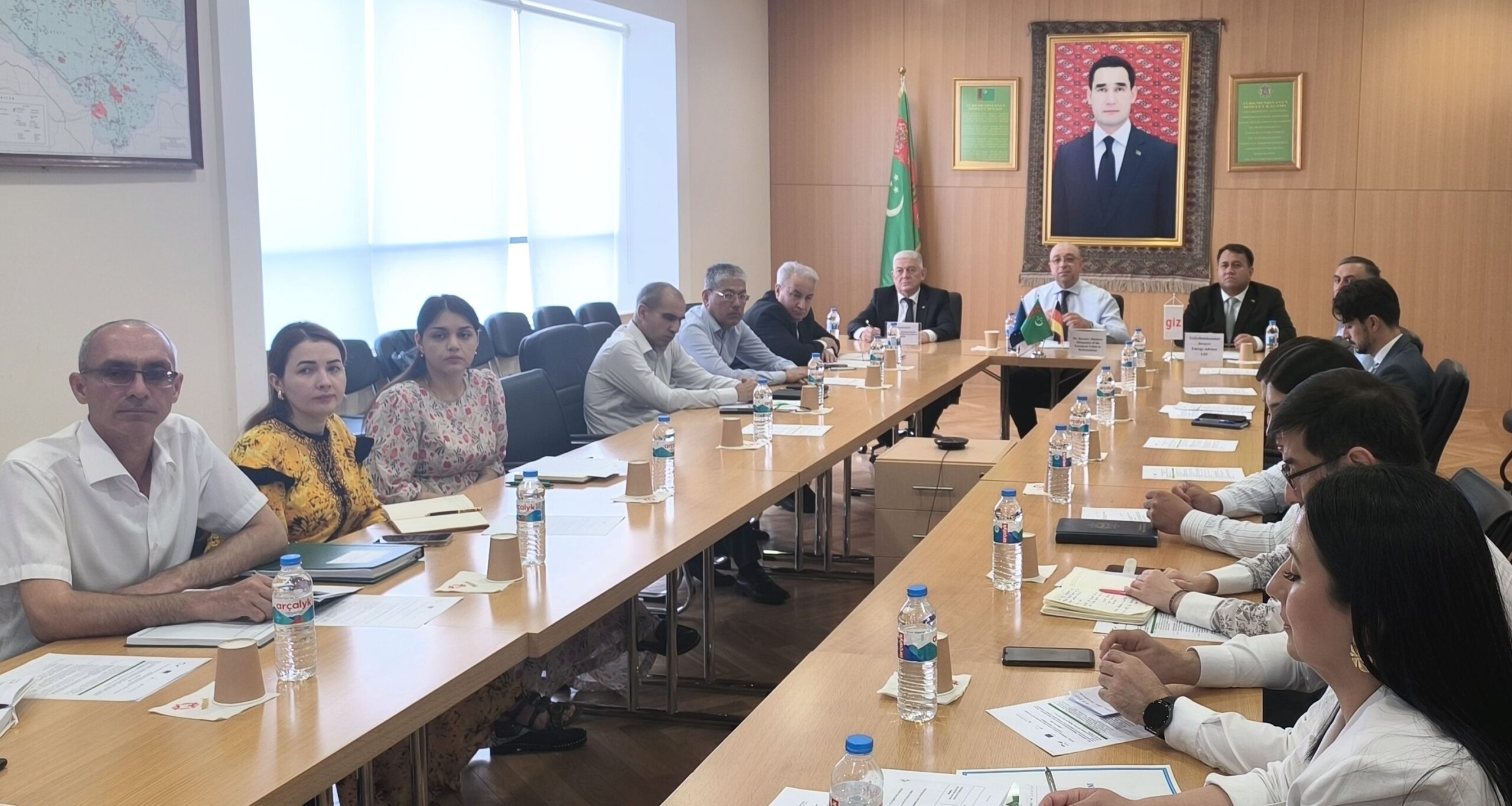
On June 4, 2025 a hybrid workshop took place today in Ashgabat, spotlighting the new EU energy import requirements under the Methane Regulation (2024/1787), adopted on June 13, 2024, which targets the reduction of methane emissions in the energy sector. The event was organized within the framework of the “EU for a green Turkmenistan: Policy Dialogue and Climate Action 2024–2028” project, co-funded by the European Union and the German Federal Foreign Office and implemented by GIZ.
The workshop served as a vital platform for fostering dialogue and knowledge exchange between the European Union and Turkmenistan on climate policy, with a focus on mitigating the impacts of climate change and enhancing environmental protection. A key highlight of the event was the presentation of the new EU Methane Regulation (2024/1787), which introduces robust measures to reduce methane emissions within the EU energy sector and across global supply chains. The regulation sets out comprehensive requirements for monitoring, reporting, verification, and mitigation of methane emissions. Special emphasis was placed on the OGMP 2.0, Oil and Gas Methane Partnership Initiative — the flagship program of the United Nations Environment Programme (UNEP) — which aims to enhance transparency and drive down methane emissions in the oil and gas industry. OGMP 2.0 serves as a cornerstone data source for the International Methane Emissions Observatory (IMEO), which compiles a global emissions database and monitors progress toward reduction targets. The event also showcased cutting-edge satellite-based monitoring technologies, including the IMEO-MARS platform — “Methane emissions alert and response system” — and GHGSat’s infrared satellites, which are capable of detecting major methane leaks worldwide. These tools are recognized as essential instruments for ensuring compliance with the new EU regulatory framework and for advancing environmental accountability in the energy sector.
The event highlighted the EU’s dedication to sharing best practices, promoting international cooperation for sustainable development, and advancing emission reductions beyond its borders.
“With the adoption of the new EU Methane Regulation, we are taking a significant step forward in the global effort to reduce greenhouse gas emissions and combat climate change,” stated a representative from the European Commission’s Directorate-General for Energy (DG ENER). “This regulation not only promotes sustainable practices but also strengthens our position in the international energy market for the future.”


