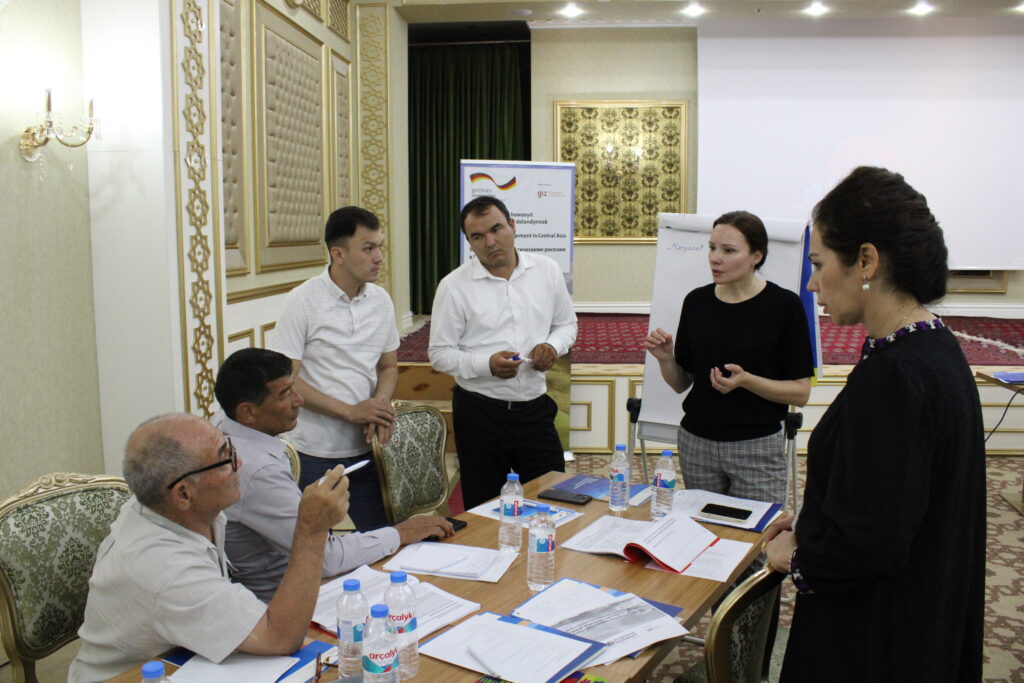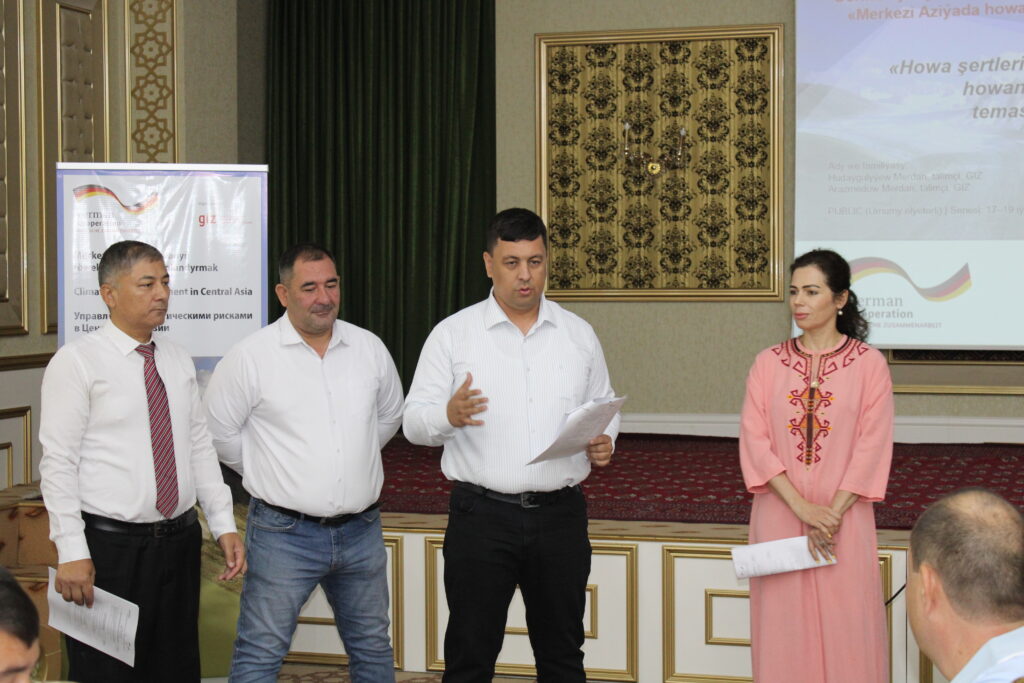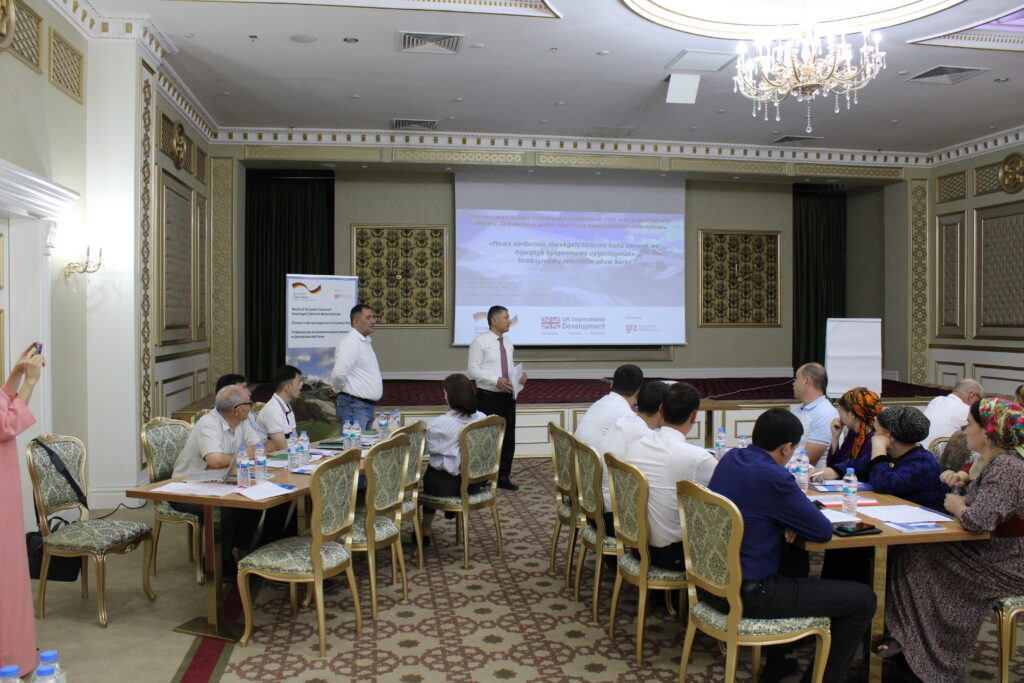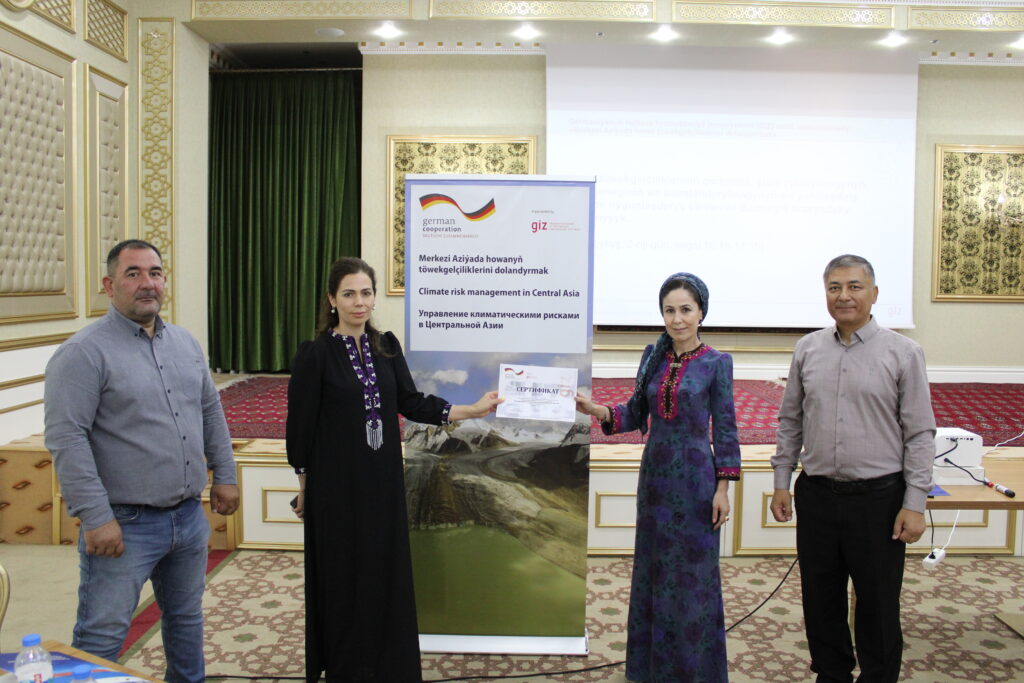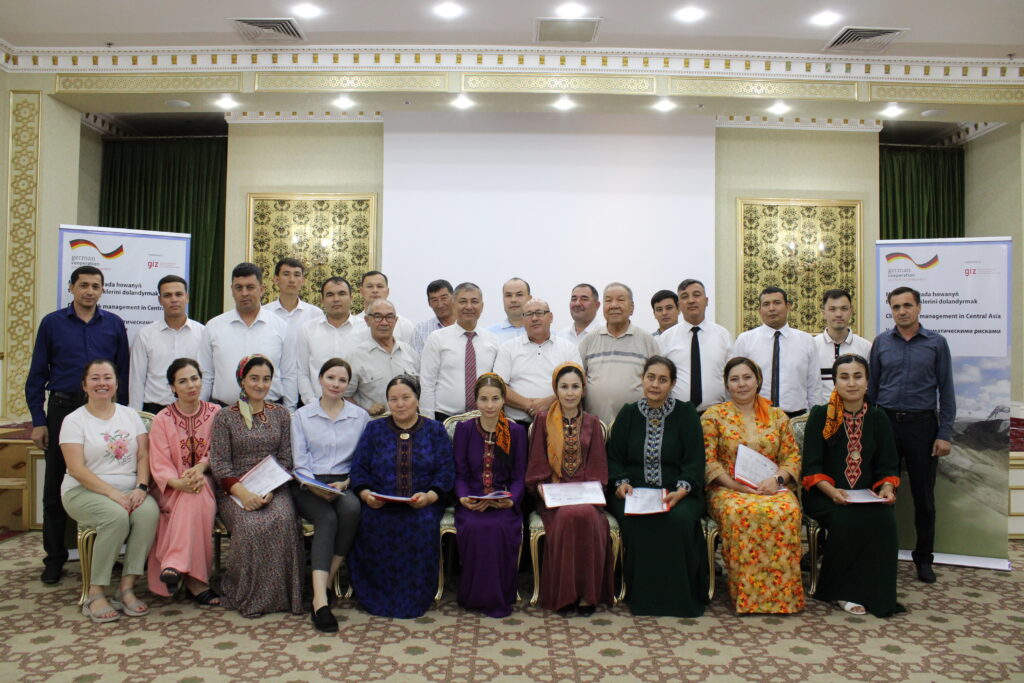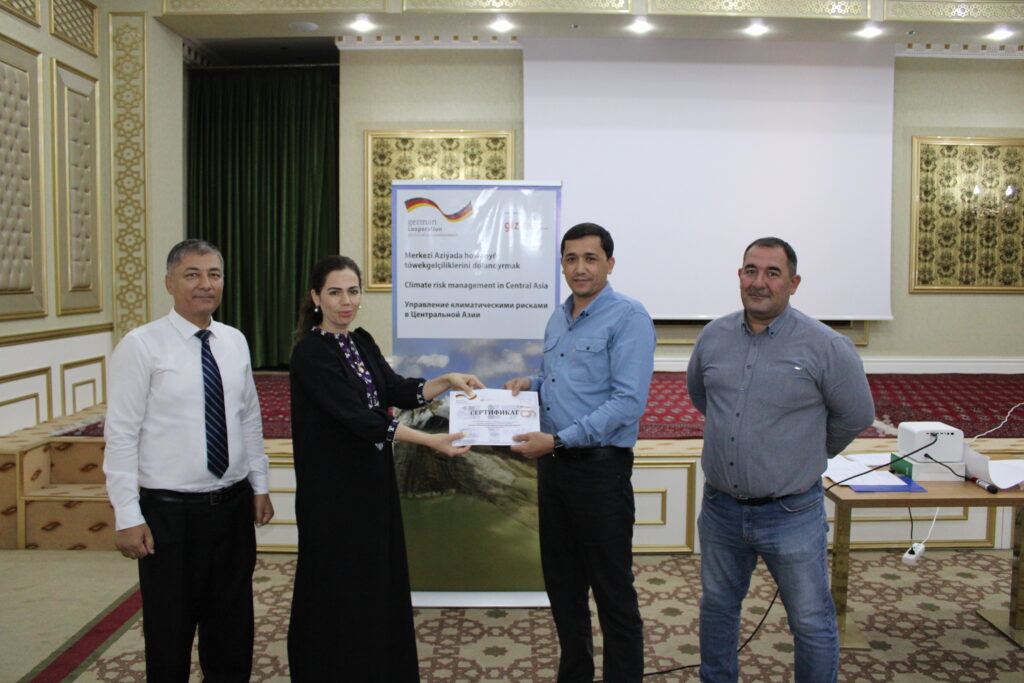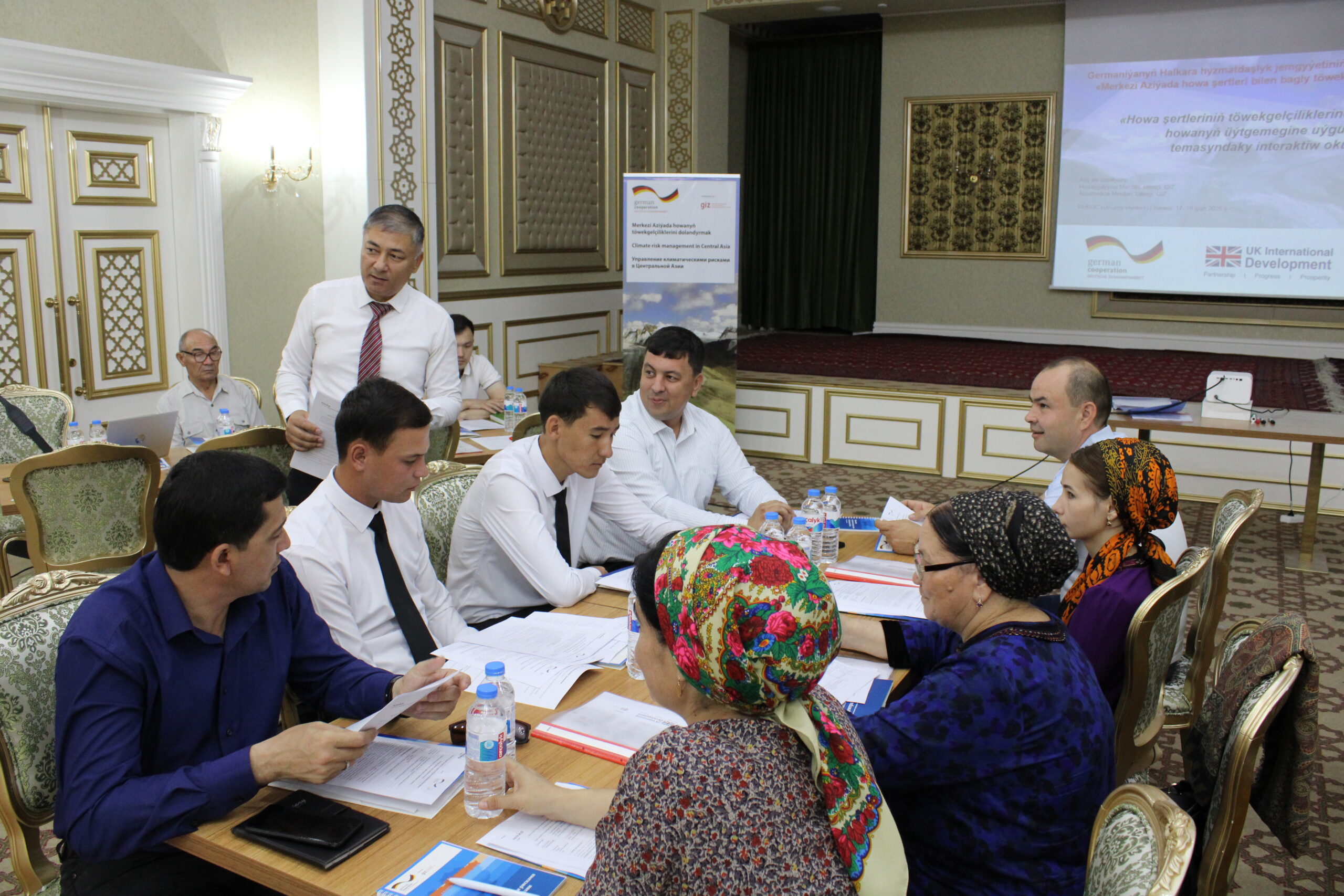
This week wrapped up the 3-day training on climate risk assessment in the Murghab River Basin in Mary, Turkmenistan. The event brought Representatives of the public and private sectors, the Hydrometeorological Service of Turkmenistan, the National Red Crescent Society of Turkmenistan, the Nature Protection Society of Turkmenistan, the Marysuvkhozjalyk Production Association and the State Energy Institute of Turkmenistan. The training series are organized within the framework of the regional programme “Climate risk management in Central Asia”, implemented by GIZ on behalf of the German Government.
The Murghab River is a vital source of water in one of the most arid regions of Central Asia. Flowing from Afghanistan into Turkmenistan’s Karakum Desert, it provides fresh water to communities, crops, and fragile ecosystems. Recent studies show that rainfall in the Murghab basin has significantly declined, especially in winter months, and that rising temperatures are making the basin more vulnerable to drying and drought. Climate models anticipate one of the most severe reductions in average annual river flow across Central Asia will occur in the Murghab basin — up to 40% less water by mid-century, even under moderate warming scenarios [1].
A key focus of the Mary training was not only to assess these climate vulnerabilities, but also to jointly develop practical adaptation measures. Adaptation measures are especially critical in the context of unstable water regimes and increasing frequency of extreme weather events. They enable proactive infrastructure planning, protect populations and agriculture and preserve ecosystems.
The Mary training was the third in a series of four, following sessions in Samarkand (June 9–11, Zarafshan basin) and Taraz (June 10–12, Chon-Kemin / Chu basin). The final training will be held in Fergana (June 23–25, focusing on the Isfayram-Sai and Shakhimardon basins). The trainings aim to strengthen local capacity to assess climate risks and jointly develop adaptation responses in river basins that are particularly vulnerable to climate change impacts — including floods, mudflows, droughts, and ecosystem degradation.