




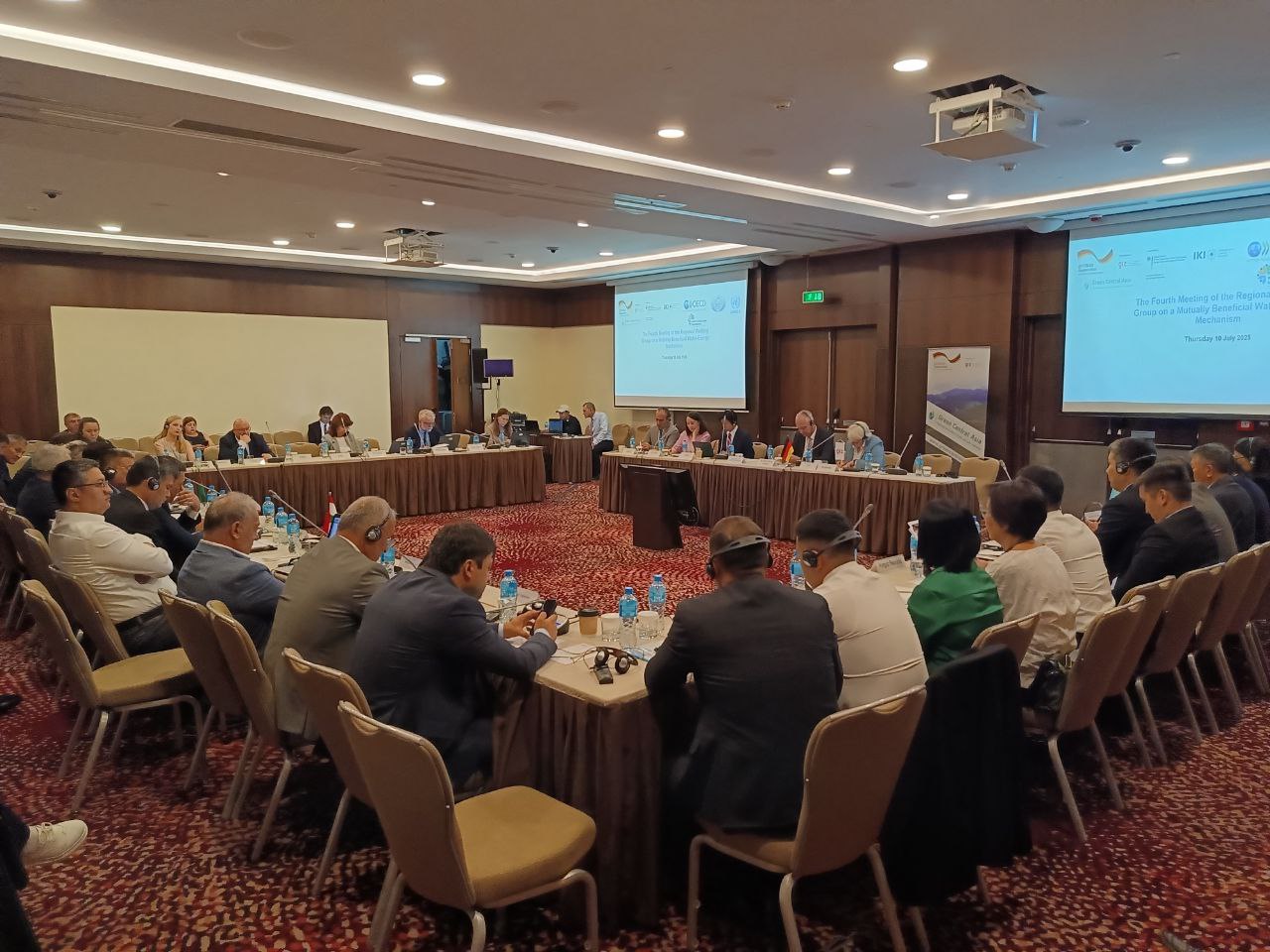
The 4th Meeting of the Regional Working Group on a Mutually Beneficial Water-Energy Mechanism took place in Astana, Kazakhstan on July 10th, bringing together representatives from Central Asian countries, regional institutions, and international development partners. RWG meetings on Water-Energy cooperation have become an important dialogue platform aimed at enhancing sustainable water and energy resource management across the region.
Organized under the GIZ Green Central Asia Programme in collaboration with the OECD’s Water, Energy and Land-use Nexus project, the 4th meeting built upon previous discussions (notably – on the 3rd RWG meeting in Tashkent in December 2024) to address the interconnected challenges and opportunities within the water and energy sectors.
The meeting commenced with welcome remarks from Mr. Aslan Abdraimov, Vice Minister of Water Resources and Irrigation of the Republic of Kazakhstan, and opening remarks from Mr. Ullrich Kinne, Deputy Head of Mission and Economic Counsellor, German Embassy in Kazakhstan.
Throughout the day, participants engaged in a series of insightful sessions:
- Insights from water-energy modelling: Experts presented updates on regional water and energy models, discussing their application in supporting cross-sectoral and transboundary cooperation. Discussions focused on effective utilization of model results for decision-making, with contributions from SIC ICWC, the World Bank (Central Asia Water & Energy Program), UNECE, and ADB (CAREC Water Pillar).
- Environmental Integrity of Water and Energy Cooperation: This session explored ongoing and planned work on the environmental aspects of water and energy cooperation, including ecological flows and biodiversity protection. Representatives from GIZ, the Embassy of Switzerland in Uzbekistan (Blue Peace Central Asia Project), and SIC ICWC shared key messages from their respective initiatives and studies.
- Informational Session on Afghanistan: A dedicated session provided updates on recent developments in Afghanistan highly relevant to water, energy, and land-use nexus issues in Central Asia, led by Ms. Charity Watson from the United Nations Assistance Mission in Afghanistan.
- Opportunities to Improve Institutional Arrangements: A focused discussion explored ways to strengthen regional and national water and energy institutions to facilitate greater cooperation. Presentations from EC IFAS, SIC ICWC, UNECE, and GIZ offered insights into processes, needs, and findings from nexus governance analysis and renewable energy projects.
The meeting concluded with an open discussion on key takeaways, questions, and requests from Central Asian countries, setting expectations for the upcoming Fifth Regional Working Group meeting. Closing remarks were delivered by Dr. Caroline Milow, Manager of the Green Central Asia Programme, GIZ Germany, and Mr. Takayoshi Kato, Economist, OECD.
The Fourth Meeting underscored the growing recognition in Central Asia of the multidimensional benefits of coordinated water and energy management, extending beyond economic gains to encompass environmental, social, and political aspects. The collaborative efforts are crucial for improving water allocation, diversifying energy sources, strengthening regional connectivity, and ensuring ecological sustainability in the face of climate change.


