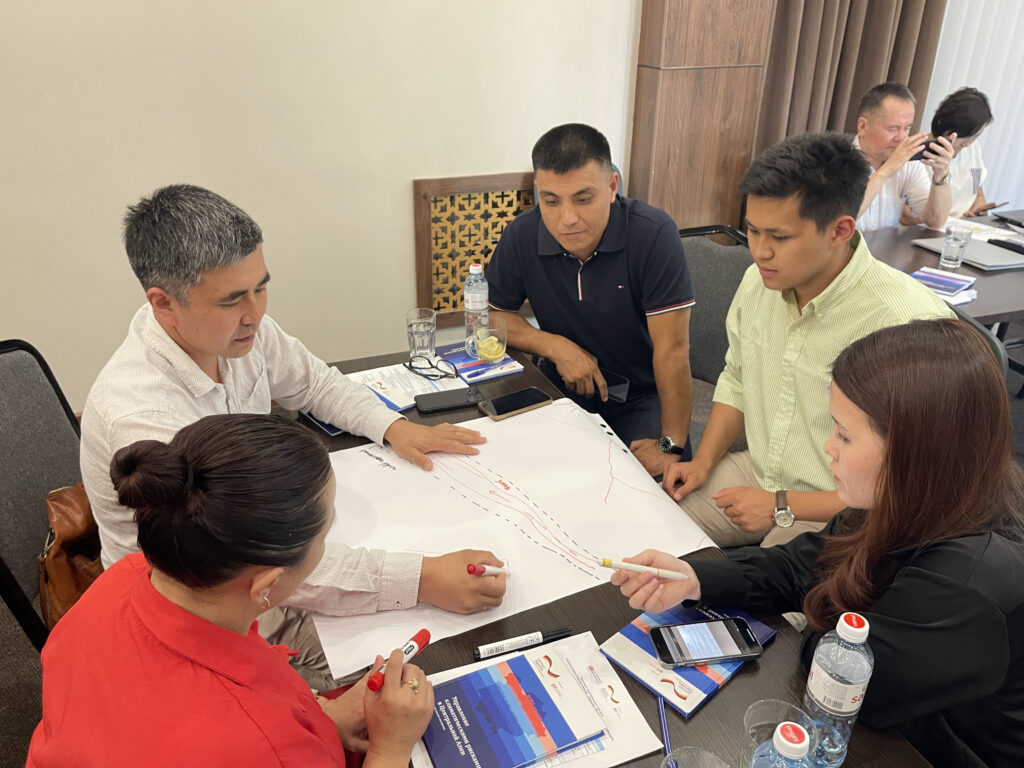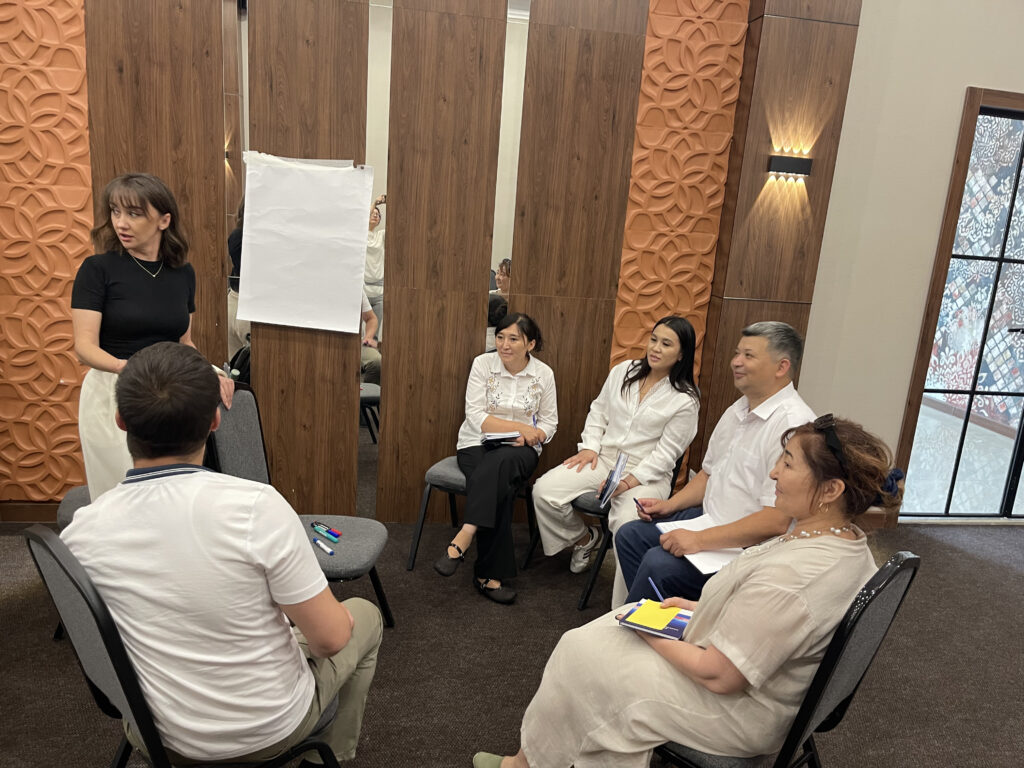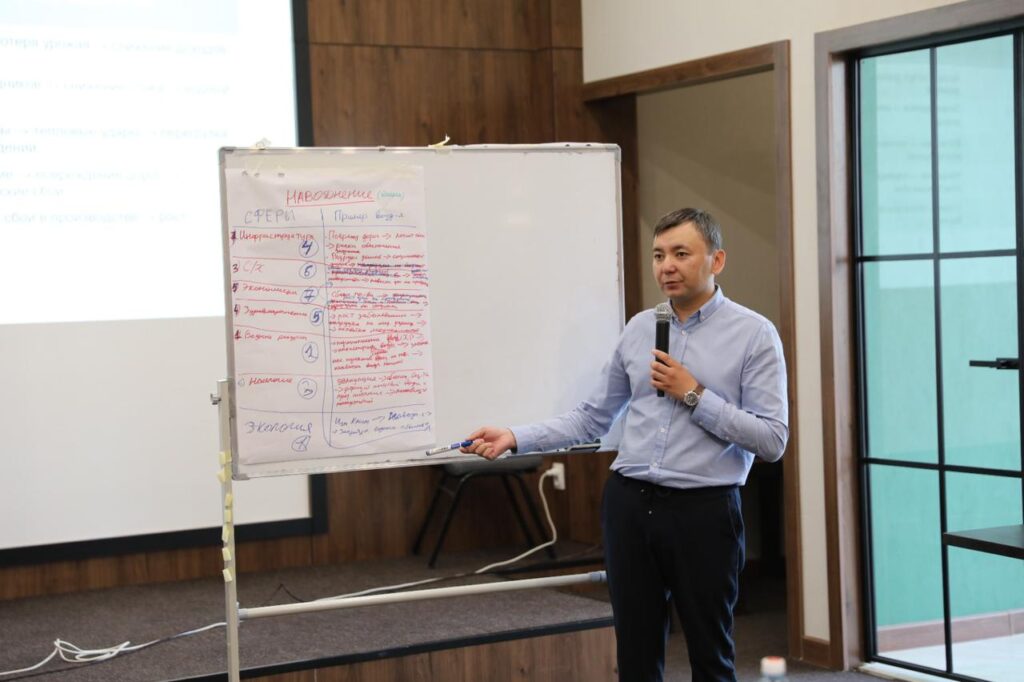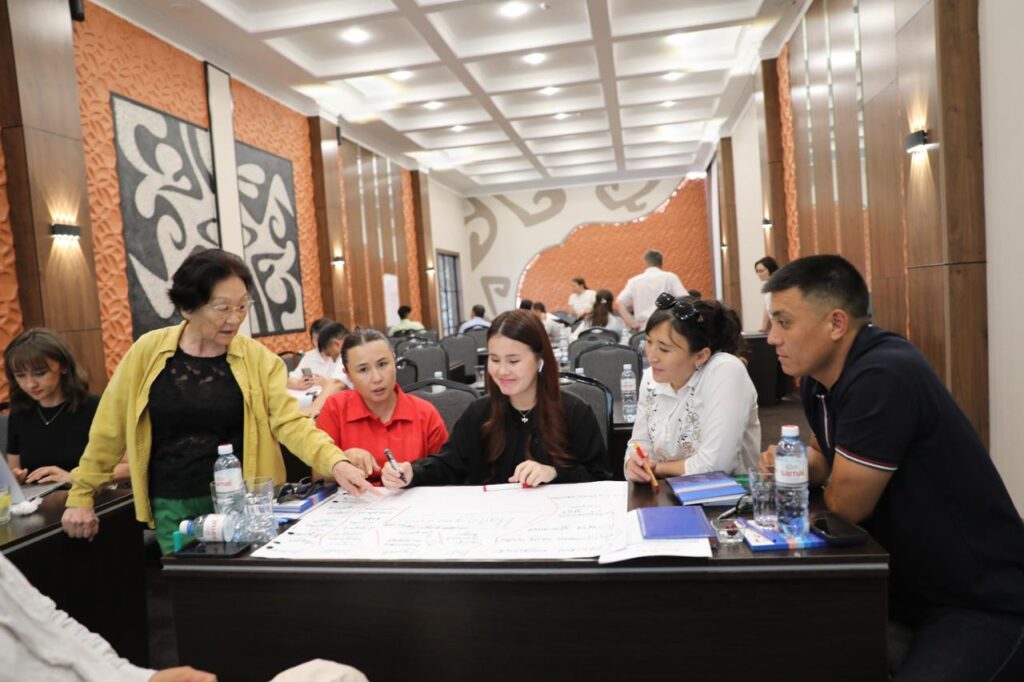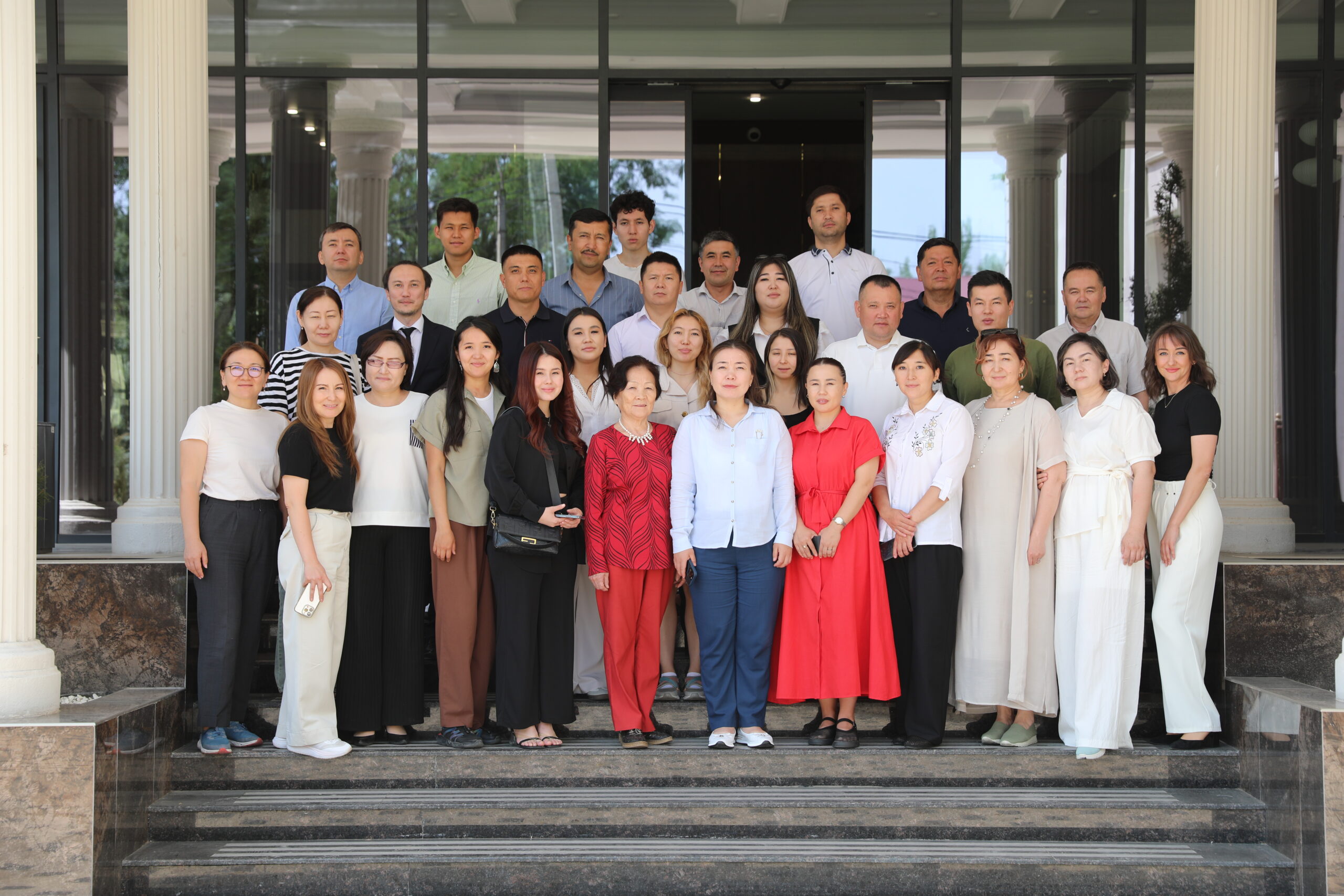
This week wrapped up the regional 3-day training on climate risk assessment in the transboundary Chon-Kemin / Chu River basin in Taraz. The event brought together representatives of local authorities and civil society, as well as water sector and emergency prevention specialists from Kazakhstan and Kyrgyzstan involved in development planning at the basin level. The training series are organized within the framework of the regional programme “Climate risk management in Central Asia”, implemented by GIZ on behalf of the German Government.
The Chon-Kemin River is an important tributary of the Chu River, contributing up to 40% of its total flow. It plays a crucial role in supplying fresh water to Kyrgyzstan’s capital, Bishkek, before continuing downstream into the Kazakh steppe. Over a 40-year period since 1955, the glacier area in the upper reaches of the Chon-Kemin basin has decreased by 16.4%, increasing the risk of floods and mudflows. Glacier retreat also means less meltwater feeding the river basin during the summer. Particularly severe impacts were observed during the drought of 2021, when agricultural lands, springs, and water access for pastures and rural communities suffered in the lower Chu basin across both countries. If current climate trends persist, glacier-fed runoff may decline by 25–35% by 2050, with direct consequences for the region’s water security and climate resilience [1,2].
These statistics were echoed during the training, where participants — working in small groups — independently identified drought and low water availability as the most pressing climate hazards for the Chon-Kemin and Chu basins. A key focus of the training is not only to assess these climate vulnerabilities, but also to jointly develop practical adaptation measures with the involvement of local communities, water management agencies, and environmental services. Such climate risks assessment and management skills with the involvement of wide range of stakeholders are especially relevant in the context of unstable water regimes, glacial retreat, and increasing frequency of extreme weather events. They enable proactive infrastructure planning, protect populations and agriculture, preserve ecosystems, and help prevent transboundary conflicts.
The Taraz training was the second in a series of four. Previously, from June 9–11, 2025, a similar workshop was held in Samarkand for the Zarafshan river basin. Upcoming training sessions will also take place in Mary (June 17–19, Murghab basin) and Fergana (June 23–25, Isfayram-Sai and Shahimardan basins). All trainings aim to strengthen local capacity to assess climate risks and jointly develop adaptation responses in river basins that are particularly vulnerable to climate change impacts — including floods, mudflows, droughts, and ecosystem degradation.
[2] Central Asian drought highlights water vulnerability | PreventionWeb