




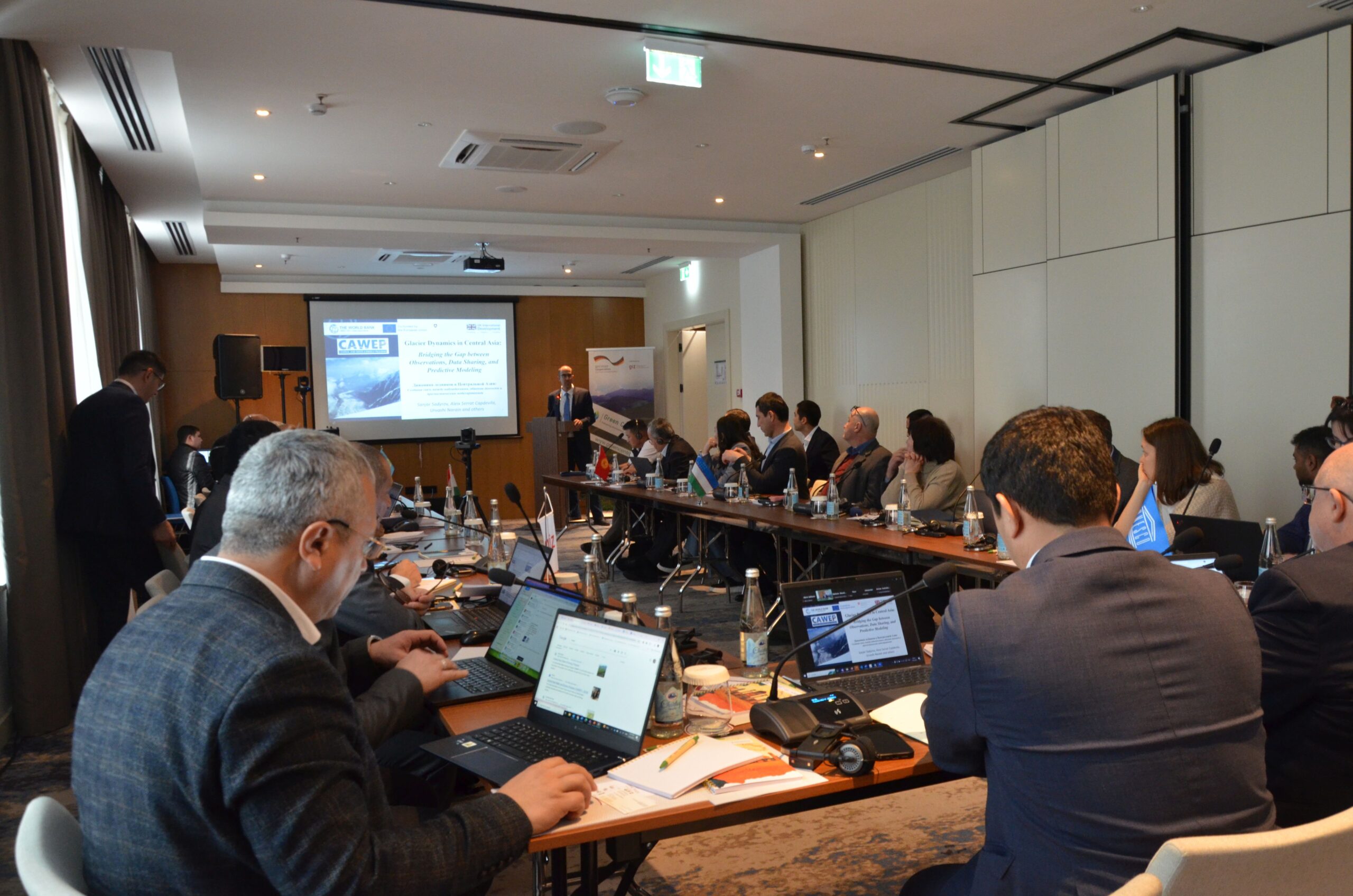
The regular meeting of the Regional Working Group on Glacier Monitoring and Modelling in Central Asia was held in Tashkent on 11 March. The aim of the meeting was to agree on joint actions on glacier monitoring in Central Asia
The participants of the meeting discussed the results achieved and agreed on a joint roadmap for monitoring and modelling of glaciers and glacial lakes for 2025-2026.
The participants also discussed clear mechanisms of interaction and division of tasks between the participating countries, taking into account the coordinated approach of international stakeholders, and developed recommendations for the introduction of modern technologies in the monitoring of glacial lakes.
This meeting was an important step in supporting the UN General Assembly Resolution and the implementation of the regional action plan in the framework of Green Central Asia. It will unite the efforts of Central Asian countries and international stakeholders to address common climate challenges, strengthen cooperation and ensure sustainable management of glacier resources.
For reference:
One of the key areas of the Regional Action Plan was the creation of a joint regional document on glacier monitoring and modelling in Central Asia. To realize this task, a Regional Working Group (RWG) was formed, which included representatives of relevant government agencies of the Central Asian countries. In 2023, seven institutes responsible for glacier monitoring four Central Asian countries (KAZ, KGZ, TAJ, UZB) signed a Memorandum of Understanding on joint actions in scientific research of glaciers in Central Asia, with Turkmenistan being a monitor.
Over the past years, significant activities have been carried out within the framework of the RWG, including an assessment of the situation of Central Asian glaciers, a scientific expedition to the Tuyiksu Glacier in Kazakhstan (2023) to share experience and develop common approaches to glacier monitoring and training on remote monitoring of glacier systems (2024) for scientists from Central Asian countries using modern tools such as ArcGIS and remote sensing. In the framework of Green Central Asia several monitoring and forecasting tools were developed and/or refined and climate models developed.
These activities were an important step in strengthening regional cooperation and creating a basis for further cooperation between Central Asian countries on glacier monitoring. The next stage of work involves harmonizing joint approaches not only by national but to the extent possible by international stakeholders and approving a joint roadmap for 2025-2026.


