


From 2 to 6 November 2026, representatives of water management ministries, hydrometeorological services and other water-related organizations from five Central Asian countries participated in the study visit to Slovakia and Austria, organized in cooperation with Vodohospodarska Vystavba (VVB).
The goal of the study tour was to gain an advanced knowledge of water resources management, flood protection and dam safety regulation as well as the exchange of experience in automation, digitalization, monitoring, and management of water resources, the operation and maintenance of infrastructure, flood protection and warning systems in Danube River basin between the Slovakian and EU institutions and Central Asian experts.
Participants visited the Gabčíkovo Hydroelectric Power Plant, Slovakia’s largest hydropower facility, which generates approximately 10% of the country’s electricity, with an average annual output of 2,246 GWh. They were also introduced to the plant’s ongoing modernization project, which aims to improve operational efficiency and increase electricity generation despite reduced water availability resulting from climate change.
Another highlight of the study visit was the Turček Water Reservoir, an important component of Slovakia’s drinking-water supply infrastructure. With a storage capacity of approximately 10.8 million cubic meters and a dam reaching 59 meters in height, the reservoir supplies raw water to a treatment plant serving several districts in central Slovakia. Beyond ensuring a reliable source of drinking water, the reservoir plays an important role in flood protection, maintaining ecological flows in the Turiec River and generating renewable electricity through three small hydropower plants with a combined installed capacity of 300 kW. The facility demonstrates an integrated approach to water-resource management, combining water supply, flood risk reduction, environmental protection and renewable energy generation within a single infrastructure project.
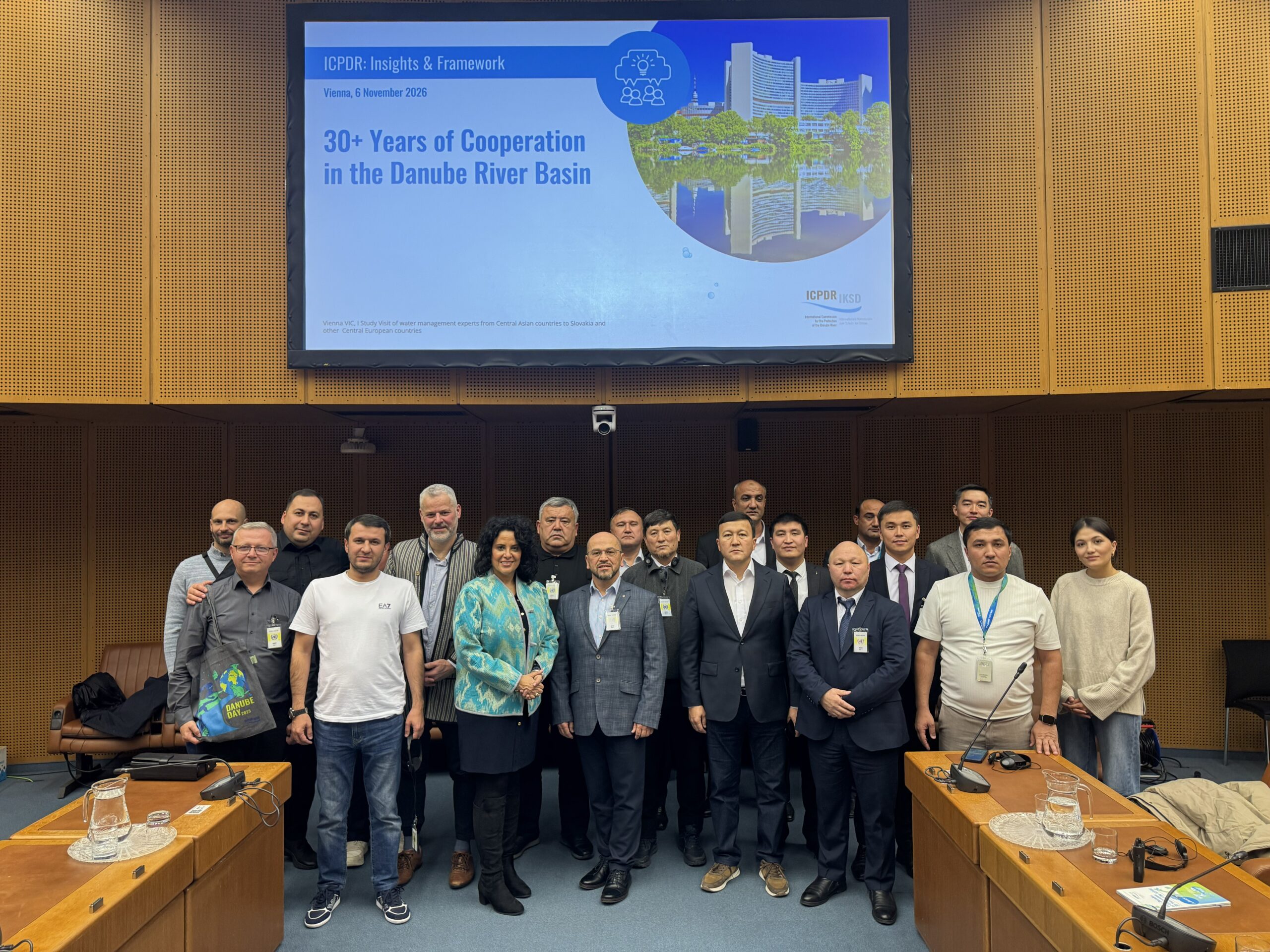
On the final day of the study visit, on 6 November, the participants visited the International Commission for the Protection of the Danube River (ICPDR) in Vienna, where they met with representatives of the Commission and learned about its institutional framework, coordination mechanisms and experience in transboundary water management. The discussions focused on more than 30 years of cooperation among countries sharing the Danube River Basin, which covers 19 countries and is home to approximately 79 million people. The ICPDR representatives presented the Commission’s approach to basin-wide planning, joint water-quality monitoring, data exchange and coordinated responses to common challenges, including pollution, floods, droughts and water scarcity. Particular attention was given to how countries work together to develop shared river basin management and flood risk management plans, while translating basin-wide priorities into national actions. The exchange provided valuable insights into the role of regional institutions in strengthening cooperation, building trust and promoting sustainable water management across shared river basins.


