


Representatives of relevant ministries and agencies of Turkmenistan conducted a study visit to the United Kingdom from October 12 to 16, 2026, to explore international experiences and best practices in methane emissions reduction. The Study Tour was organized with the support of the European Union project ‘Policy Dialogue and Climate Action 2024–2029,’ co-funded by the EU and the Federal Foreign Office of Germany, and implemented by GIZ.
During the visit, Turkmen specialists studied advanced British expertise, modern regulatory approaches, and innovative technologies for monitoring, verifying, and reducing methane emissions in the oil and gas sector. The itinerary covered key industrial, scientific, and governmental centers across the country, including London, Aberdeen, Peterhead, and the Teesside region.
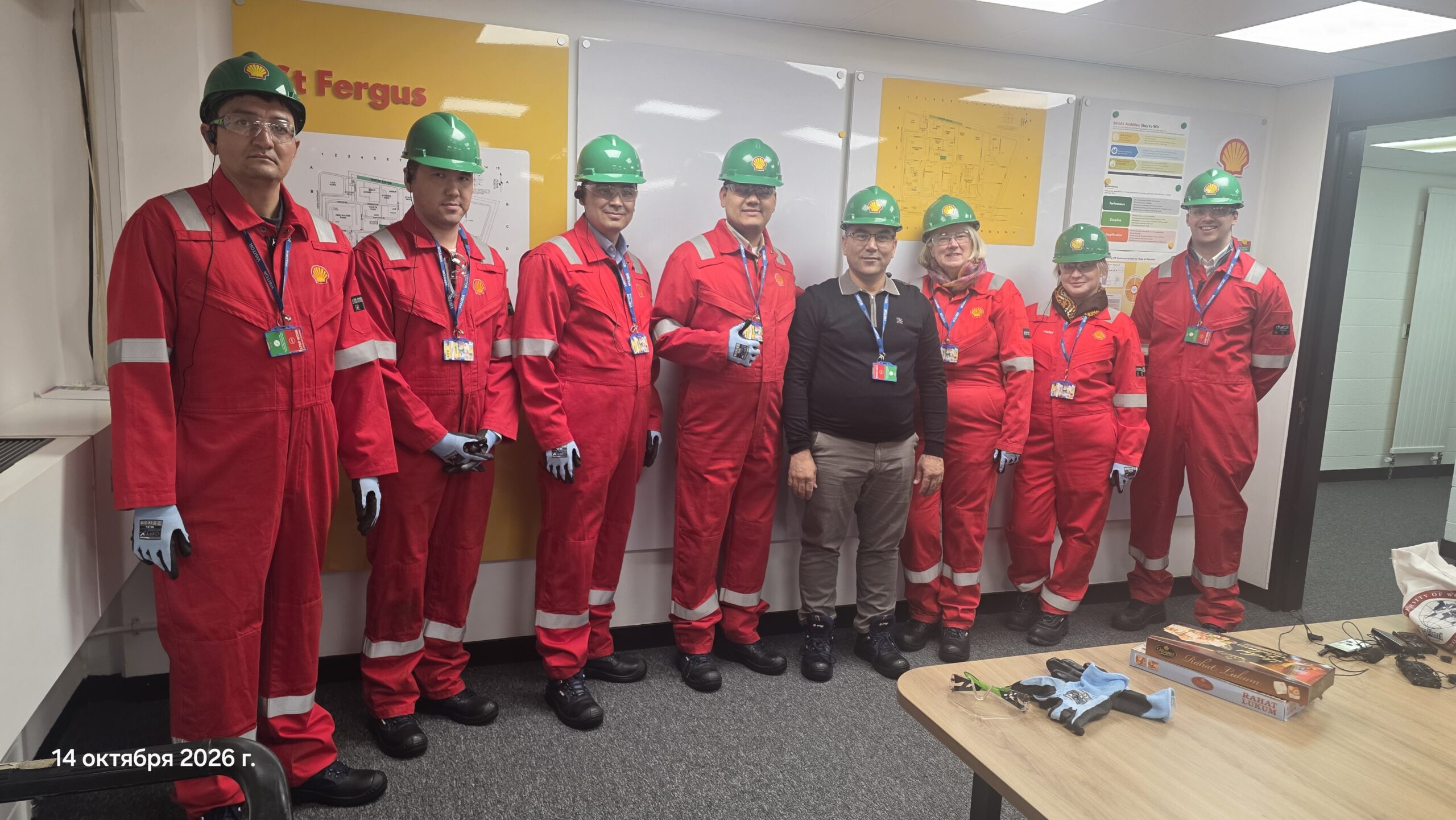
The intensive program included briefings with the UK Department for Energy Security and Net Zero (DESNZ) and other government bodies responsible for climate policy and the implementation of methane reduction measures. Furthermore, the delegation conducted technical visits to the Shell St Fergus gas plant and the CATS gas terminal, operated by Wood Group. Meetings were also held with OEUK (Offshore Energies UK), the leading trade association for the offshore energy sector, and key private companies that shared their expertise in methane abatement. As part of this engagement, the delegation visited the headquarters of Score Group Limited, a company specializing in valve manufacturing and fugitive emissions management. The program also encompassed academic institutions, including the Greenhouse Gas Research Group at Royal Holloway, University of London, a meeting with the management of GHGSat to discuss high-precision satellite monitoring, and a session with experts from BP, who presented their leading practices in methane emissions and flare management.
Special attention during the visit was paid to studying the UK’s experience in applying the standards of the EU Methane Regulation, which governs environmental requirements for fossil fuel imports. For Turkmenistan, gaining familiarity with these regulatory mechanisms holds significant importance in the context of exploring prospects for cooperation in the European energy market and adapting infrastructure to international environmental standards.
The outcomes of the meetings and the technical expertise gained will be directed toward the practical implementation of methane emission reduction measures, directly contributing to global climate change goals and the fulfillment of the Global Methane Pledge.


