




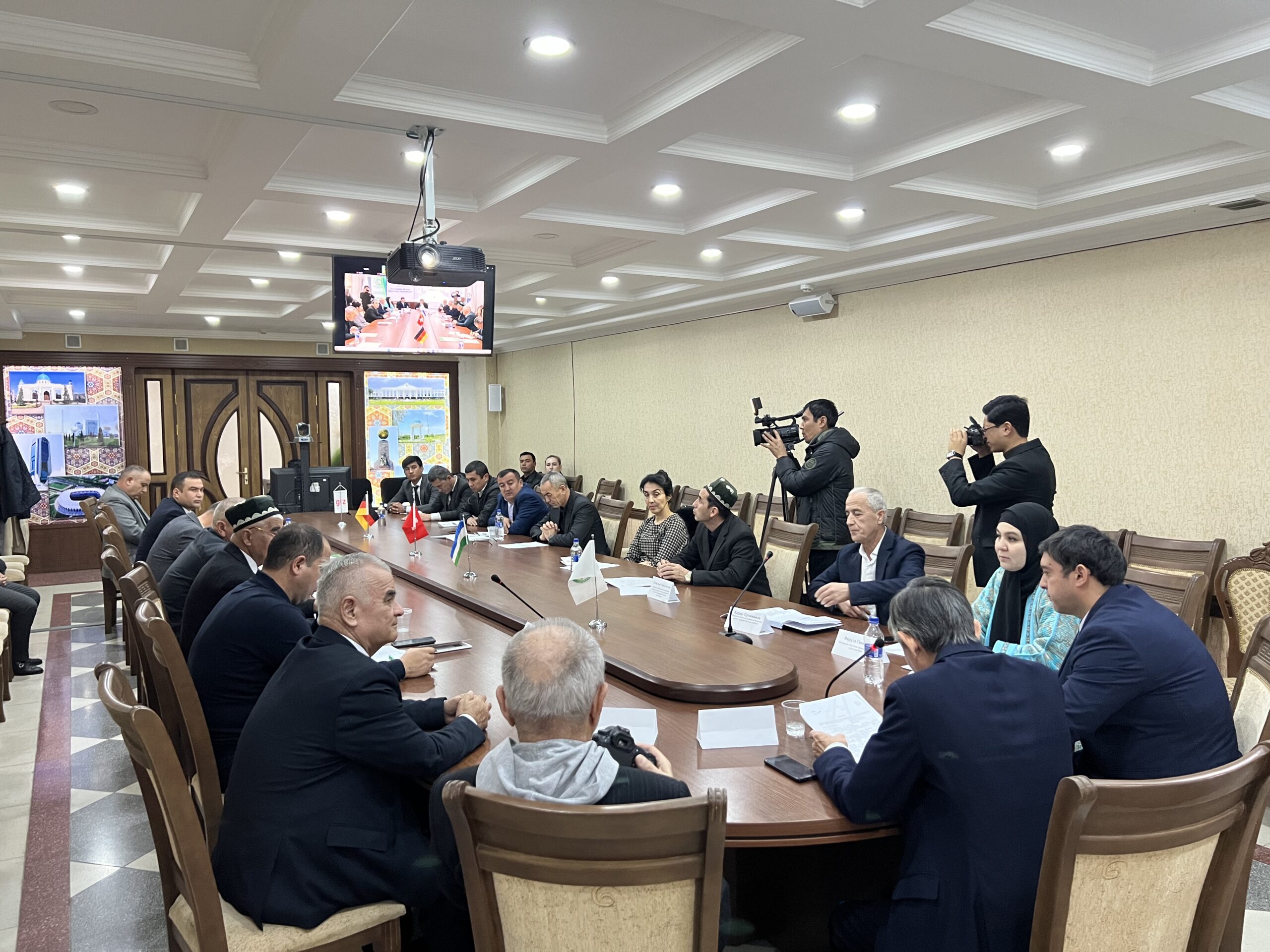
As part of the regional programme ‘Climate-Sensitive Water Resources Management in Central Asia’, implemented by GIZ, more than twenty meetings, roundtables, and seminars were held from November 4 to 29 across seven regions of the country — Andijan, Gulistan, Jizzakh, Namangan, Nukus, Urgench, and Fergana. The events aimed to raise environmental awareness and promote a culture of rational water use.
Participants included representatives from parliamentary structures, water management and environmental agencies, ecological scientists, EcoMovement activists, university professors and students, as well as representatives of NGOs and the media. In total, over 500 people received information about the state of water resources, climate change-related threats, and measures to preserve the ecosystems of the Amu Darya and Syr Darya river basins.
The series of events opened on November 4 in Jizzakh and Gulistan. During the roundtables, experts emphasized the key role of the Syr Darya in water supply, agriculture, and energy in Kazakhstan, Kyrgyzstan, Tajikistan, and Uzbekistan. Speakers noted that the 2025 International Syr Darya River Day was dedicated to fostering careful water use and strengthening climate adaptation measures.
In Namangan, Andijan, and Fergana, discussions continued through meetings with students, environmental specialists, and activists. Special attention was given to water scarcity and the impact of anthropogenic factors on regional biodiversity. Participants stressed the need to implement advanced water-saving technologies and promote a culture of responsible water use.
On November 7 and 8, events dedicated to International Amu Darya River Day were held in Nukus and Urgench. The discussions focused on projects to stabilize water bodies, restore fish resources, and maintain river ecosystems.
Seminars at Karakalpak State University and Urgench State University continued these discussions. Participants actively addressed issues of water security in the Aral Sea region, prospects for the sustainable use of the Amu Darya’s limited resources, and modern approaches to water management.
A significant part of the events was devoted to engaging youth. Universities in Jizzakh, Gulistan, Namangan, Fergana, and Nukus became platforms for discussions where students and researchers proposed their own ideas for addressing water scarcity, conserving biodiversity, and promoting environmental awareness.
The events demonstrated strong public interest in water, climate, and environmental issues. Representatives of the EcoMovement of Uzbekistan, as well as GIZ and SDC partners, emphasized that including International Amu Darya and Syr Darya River Days in the ecological calendar helps draw attention to the conservation of transboundary river resources and improves mechanisms for their sustainable management.


